

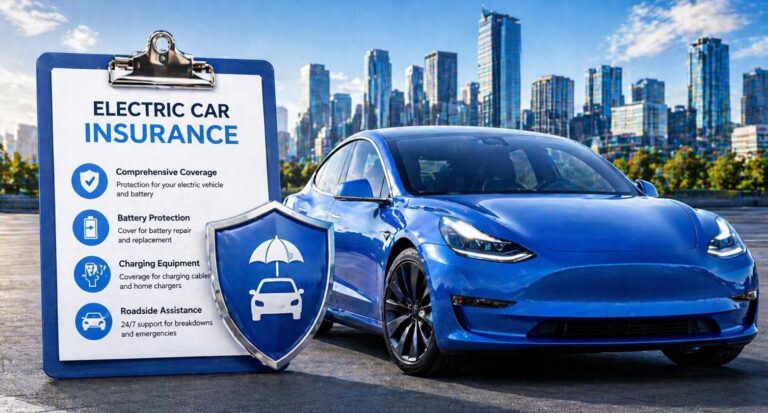
Electric vehicles (EVs) are rapidly gaining popularity across the United States, Europe, and Asia. As more drivers switch to electric cars, an important question arises: is electric car insurance more expensive than traditional car insurance?
This guide explains everything you need to know about electric car insurance in 2026, including costs, coverage types, and practical ways to reduce your premium.
Is Electric Car Insurance More Expensive?
In most cases, electric car insurance is slightly more expensive than insurance for gasoline vehicles. On average, EV insurance can cost 10% to 30% more.
The higher cost is mainly due to:
- Expensive battery replacement
- Advanced onboard technology such as sensors and software
- Limited number of specialized repair centers
However, this does not mean EV ownership is more expensive overall. Lower fuel and maintenance costs can offset the higher insurance premiums over time.
Average Electric Car Insurance Cost (2026)
Insurance costs vary by region, but global averages are as follows:
- United States: $1,800 to $2,800 per year
- United Kingdom: £900 to £1,800 per year
- Europe: €1,200 to €2,200 per year
Smaller and more affordable electric cars typically cost less to insure than luxury EVs with high market value.
Types of Electric Car Insurance Coverage
Understanding different coverage options helps you choose the right protection.
Liability Insurance
Covers damage to other vehicles, property, or people. This type of insurance is mandatory in most countries.
Collision Coverage
Pays for damage to your electric vehicle after an accident. This is especially important for high-value EVs.
Comprehensive Coverage
Protects against non-collision events such as theft, fire, vandalism, and natural disasters.
Battery Protection Coverage
Covers repair or replacement of the battery, which is the most expensive component of an electric vehicle.
Special Benefits of EV Insurance
Many insurance providers now offer features specifically designed for electric vehicles, including:
- Charging cable protection
- Home charging station coverage
- Roadside assistance for battery-related issues
- Dedicated battery replacement plans
These benefits provide additional protection tailored to EV owners.
Factors That Affect Electric Car Insurance Cost
Several factors influence how much you pay for EV insurance:
- Vehicle model and market value
- Battery size and replacement cost
- Driver’s age and driving history
- Location and traffic conditions
- Annual mileage
Luxury electric cars generally have higher insurance premiums, while compact EVs are more affordable to insure.
How to Save Money on Electric Car Insurance
There are several effective ways to reduce your insurance costs:
- Compare quotes from multiple insurance providers
- Choose a higher deductible to lower monthly premiums
- Maintain a clean driving record
- Limit annual mileage if possible
- Look for EV-specific or eco-friendly discounts
Many insurers now offer discounts specifically for electric vehicle owners.
Popular Insurance Providers for Electric Cars
Some well-known insurance providers offering EV coverage include:
- Tesla Insurance
- GEICO
- Progressive
- State Farm
- Allianz
Availability and pricing may vary depending on your country or region.
Electric Car Insurance vs Gas Car Insurance
Electric cars generally have higher insurance costs, but they offer savings in other areas.
- Insurance cost: Higher for EVs
- Maintenance cost: Lower for EVs
- Fuel cost: Much lower for EVs
While insurance premiums may be higher, the total cost of ownership is often lower for electric vehicles.
Why Electric Car Insurance Is Important
Electric vehicles require specialized insurance coverage because of:
- High-value battery systems
- Advanced technology and electronics
- Unique repair and maintenance requirements
Choosing the right insurance plan protects your investment and ensures long-term financial security.
Conclusion
Electric car insurance in 2026 is typically slightly more expensive than traditional car insurance. However, it provides essential protection for modern vehicles equipped with advanced technology and high-value components.
When combined with lower fuel and maintenance costs, electric vehicles still offer strong overall value. Selecting the right insurance policy ensures both protection and peace of mind as you transition to electric driving.
